
FC Barcelona's Glorious 2009 UEFA Champions League Triumph: A Journey of Brilliance and Redemption
- Asmit Bhardwaj
- Aug 21, 2023
- 3 min read

Updated: Sep 25, 2023
In the annals of football history, few moments stand as emblematic of a team's dominance, skill, and unyielding determination as FC Barcelona's UEFA Champions League victory in 2009. The journey from group stages to the final showcased a footballing masterpiece, as Barcelona emerged triumphant, reaffirming their place among the world's football elite. This essay delves into the unforgettable story of Barcelona's 2009 UEFA Champions League run, exploring the key matches, players, tactics, and the enduring legacy of a campaign that captured hearts and forever etched the team's brilliance in the record books.
The Catalyst for Glory:
Entering the 2008-2009 season, Barcelona had endured a season without any major silverware, a rarity for a club of its stature. The team, led by coach Pep Guardiola, was determined to restore their reputation and bring back the glory days to the Camp Nou.
Tactical Evolution:
Guardiola's tactical acumen played a pivotal role in Barcelona's Champions League success. The team adopted a distinct playing style built on possession-based football, high pressing, quick ball circulation, and fluid movement. This strategy, popularly known as "tiki-taka," revolutionized modern football and became synonymous with Barcelona's brand of excellence.
Key Players:
Central to Barcelona's 2009 Champions League triumph were several key players who left an indelible mark on the tournament:
Lionel Messi: A young Lionel Messi was at the heart of Barcelona's attacking prowess. His dazzling dribbles, exceptional vision, and goal-scoring ability made him a catalyst for creativity and unpredictability in the final third.
Xavi Hernandez: The midfield maestro, Xavi's precise passing, intelligent movement, and ability to control the tempo of matches were instrumental in Barcelona's dominance in possession.
Andres Iniesta: Iniesta's close ball control, intricate dribbling, and knack for delivering crucial goals added a touch of magic to Barcelona's play.
Samuel Eto'o: The Cameroonian striker's clinical finishing and ability to operate in tight spaces made him a constant threat in front of goal.
Carles Puyol: The captain and defensive rock, Puyol's leadership, aerial prowess, and last-ditch defending provided a solid foundation at the back.
Key Matches:
Barcelona's journey to the 2009 UEFA Champions League title was punctuated by memorable matches that showcased their tactical brilliance and resilience:
Group Stage: Barcelona navigated through the group stage with dominance, finishing atop Group C and showcasing their intent for the campaign.
Round of 16 - Lyon: A convincing 5-2 aggregate victory over Lyon set the tone for Barcelona's progression through the knockout stages.
Quarterfinals - Bayern Munich: A resounding 5-1 aggregate win over Bayern Munich demonstrated Barcelona's attacking prowess and ability to break down even the strongest of opponents.
Semifinals - Chelsea: The semifinal tie against Chelsea is etched in footballing history. Barcelona overcame a 1-0 first-leg deficit to win 1-1 on aggregate and advance to the final on away goals, thanks to a dramatic late goal from Andres Iniesta.
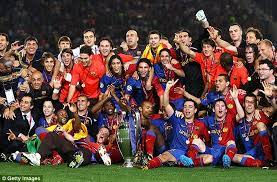
Final - Manchester United: The grand finale against Manchester United at Rome's Stadio Olimpico showcased Barcelona's complete mastery. A 2-0 victory, with goals from Samuel Eto'o and Lionel Messi, secured the Champions League trophy and culminated in an unforgettable victory lap for the jubilant team.
Enduring Legacy:
Barcelona's 2009 UEFA Champions League triumph left an enduring legacy that extends beyond the trophy itself. The campaign highlighted the transformative power of tactical innovation, the beauty of fluid footballing philosophy, and the importance of teamwork and camaraderie on the pitch. Guardiola's influence on modern football tactics is undeniable, with the "tiki-taka" style becoming a reference point for coaches and teams aiming to achieve excellence through ball possession and strategic play.
The legacy of the 2009 triumph also extended to individual players. Messi's evolution into a global footballing superstar was accelerated by his performances in the Champions League, and his partnership with Xavi and Iniesta defined an era of footballing brilliance that fans and analysts continue to study and admire.
Conclusion:
FC Barcelona's 2009 UEFA Champions League victory was not merely a triumph on the pitch; it was a masterclass in footballing artistry, tactical ingenuity, and the embodiment of a team's relentless pursuit of excellence. The campaign's impact extends beyond the club's trophy cabinet, as it influenced footballing philosophy, transformed coaching strategies, and redefined the essence of possession-based play. The legacy of the 2009 triumph continues to shine brightly, serving as a beacon of inspiration for future generations of footballers, coaches, and enthusiasts who seek to emulate the brilliance, unity, and unwavering determination that defined Barcelona's journey to the pinnacle of European football.


Comments